
What is Bitcoin?
You may have heard the term “Bitcoin” in the news, discussed by investors, or seen it referenced online. But what exactly is it? Is it real money? Is it a safe investment? Or is it just a passing tech fad? This guide will break down the fundamentals of Bitcoin in plain language, explaining what it is, how it works, and why it has captured global attention.
Bitcoin, Simplified
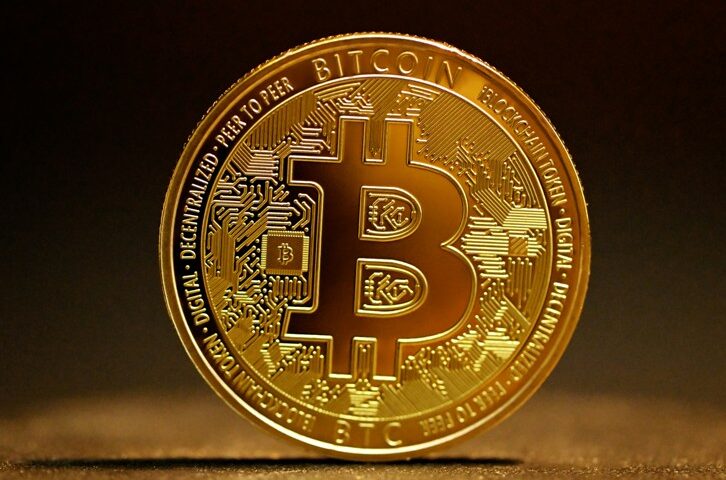
At its core, Bitcoin is a purely digital form of money. Unlike the pounds in your bank account or the notes in your wallet, it has no physical form—no coins or banknotes. You can’t hold a Bitcoin in your hand. Instead, it exists as entries on a massive, global, digital ledger called a blockchain.
Think of this ledger as a shared spreadsheet, maintained not by a single entity like a bank or government, but by thousands of computers (called “nodes”) spread across the world. This spreadsheet records every single Bitcoin transaction ever made. When someone sends Bitcoin to someone else, that transaction is broadcast to the network, verified by these computers, and added as a new “block” to the chain of previous transactions – hence the term “blockchain.” This decentralised, transparent system is the revolutionary engine behind Bitcoin.
The Key Innovation: Decentralisation
To understand why Bitcoin is significant, it’s crucial to grasp this idea of decentralisation. Traditional money, known as “fiat currency”, is centralised. The Bank of England controls the pound sterling. It can print more money, set interest rates, and track transactions through the banking system. Your bank acts as a trusted middleman to hold and move your money.
Bitcoin was invented in 2008 (and launched in 2009) by an anonymous person or group using the name Satoshi Nakamoto precisely as a reaction to this centralised control. Its creation followed the global financial crisis, which eroded trust in big banks and financial institutions. Nakamoto proposed a system where trust is placed not in a central authority, but in cryptography and a network of users.
In the Bitcoin network:
- There is no central bank or company in charge.
- The rules of the system are enforced by mathematics and code.
- Anyone can participate by running software.
- The ledger is public and transparent; anyone can view it.
How Do You Get and Use Bitcoin?
You acquire Bitcoin in a few primary ways:
- Buying It: The most common method is to purchase Bitcoin on a cryptocurrency exchange (like Coinbase, Kraken, or Binance) using traditional currency. You place an order, and the exchange matches you with a seller.
- Receiving It: You can receive Bitcoin as payment for goods or services from someone who holds it.
- “Mining” It: This is the process by which new Bitcoins are created and transactions are verified. Miners use powerful computers to solve extremely complex mathematical puzzles. The first miner to solve the puzzle gets to add the new block of transactions to the blockchain and is rewarded with newly minted Bitcoins. This process is highly competitive and energy-intensive, and for the average person, it is no longer a practical way to acquire Bitcoin.
To store your Bitcoin, you use a digital wallet. This isn’t a physical wallet but a software program (or a specialised hardware device) that holds your cryptographic keys. Your private key is like an ultra-secure, unforgeable password that proves you own your Bitcoin and allows you to send it. Lose this key, and you lose access to your funds forever—there is no “password reset.”
Key Characteristics: What Makes Bitcoin Unique?
Limited Supply: Unlike fiat money, which can be printed indefinitely, Bitcoin has a hard-capped supply. There will only ever be 21 million Bitcoins. This scarcity is built into its code and is often compared to digital gold, leading some to view it as a hedge against inflation.
Pseudonymous, Not Anonymous: While Bitcoin transactions don’t require your name or address, they are permanently recorded on the public blockchain. Each user has a public address (a string of letters and numbers). If that address is linked to your real identity, your transaction history can be traced. It offers privacy, but not complete anonymity.
Permissionless and Borderless: You can send Bitcoin to anyone, anywhere in the world, at any time, without needing approval from a bank, without worrying about borders, and often with lower fees than traditional international wire transfers.
Important Considerations and Risks
Bitcoin is a groundbreaking technology, but it is not without significant volatility and risk.
- Extreme Volatility: The price of Bitcoin is famously unstable. Its value can soar or plummet by dramatic percentages in a single day based on market sentiment, regulatory news, or influential tweets. It is not a stable store of value in the short term.
- Regulatory Uncertainty: Governments worldwide are still figuring out how to classify and regulate Bitcoin. New regulations could impact its use and value.
- Security Risks: While the Bitcoin network itself is incredibly secure, the ecosystem around it (exchanges, wallets) can be vulnerable to hacks. Users must take personal responsibility for securing their private keys.
- Environmental Impact: Bitcoin mining consumes a vast amount of electricity, leading to concerns about its carbon footprint. This remains a major point of debate and is driving innovation towards more sustainable energy sources for mining.
So, What is Bitcoin, Really?
Is it a currency? A speculative asset? Digital gold? A payment network? In truth, it is all of these things, and its ultimate role is still being defined.
For its proponents, Bitcoin represents financial sovereignty—a way for individuals to have full control over their wealth outside the traditional system. It’s a tool for the unbanked, a hedge against currency devaluation, and a revolutionary new internet protocol for value.
For sceptics, it is a speculative bubble, an environmental concern, and a volatile asset with no intrinsic value.
As a newcomer, the most important step is education. Understand what you’re dealing with before considering any investment. Bitcoin introduced the world to the transformative potential of blockchain technology, sparking a wave of innovation far beyond currency. Whether it becomes a mainstream part of our financial future or remains a niche asset, its impact on how we think about money, trust, and the architecture of the internet is undeniable.